Why Getting a Junior IT Job Feels Harder Now, and What Actually Helps You Stand Out in the AI Era
Let’s be honest.
Landing that first IT job has never been easy, but lately it feels like the bar jumped overnight. AI can write solid code, fix bugs, and even explain things better than some tutorials. So where does that leave someone just starting out?
Here’s the truth nobody tells you:
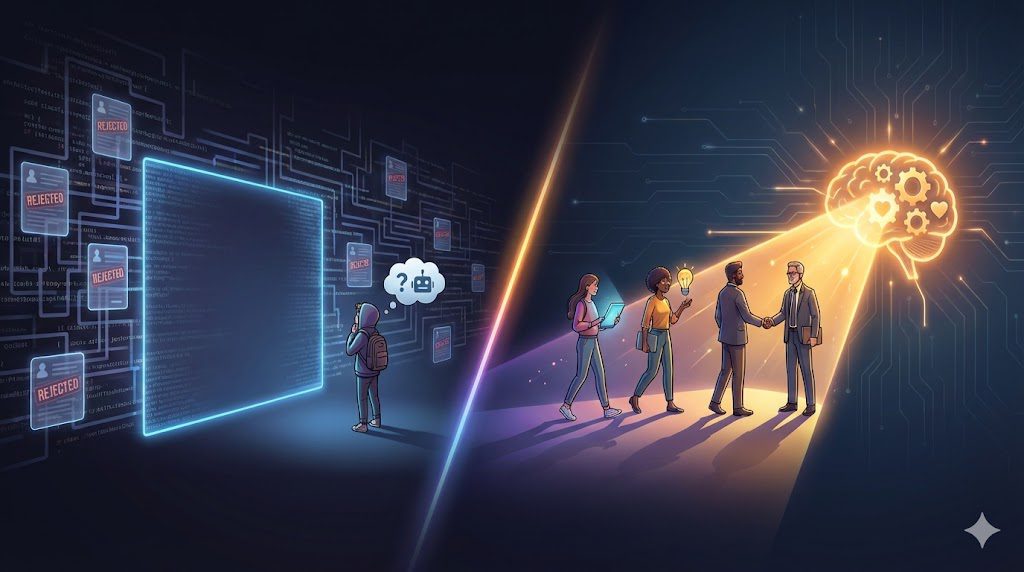
Junior jobs aren’t disappearing. What’s disappearing is the old definition of a junior.
Managers aren’t looking for someone who can type code faster than AI. They’re looking for someone who brings the one thing AI cannot replace: a real human being who can think, communicate, and work with others.
Let’s walk through what that looks like in real life.
1. Be More Human, Not More Robotic
This is the part most juniors overlook.
Your communication, empathy, teamwork, and the way you build trust matter more now than ever. A manager would choose someone reliable, calm, and easy to work with over someone who is technically stronger but hard to deal with.
People hire people they enjoy working with.
2. Hands On Experience Matters more than Tutorials
Anyone can finish a tutorial. AI can finish a tutorial. None of that proves you’re ready for real work.
What impresses managers is your ability to handle messy, uncertain, not clearly defined real world tasks. When you can say:
“Here’s a problem I faced”
“Here’s what I tried”
“Here’s how I worked with others to solve it”
That’s when they start taking you seriously.
3. Understand the Goals, Not Just the Code
If you can understand why a feature exists, what the business needs, and what actually solves the problem, you instantly stand out.
Anyone can produce technical output. Very few juniors can produce useful output.
Managers remember the ones who think.
4. Show That You Can Learn Fast
Tech changes fast. AI changes even faster.
Hiring someone who needs constant hand holding drains a team. But hiring someone who learns quickly and adapts without drama? That’s a gift.
Show that you’re curious, adaptable, and excited about new tools instead of scared of them.
5. Build a Portfolio That Tells a Story
Instead of a page full of GitHub links nobody clicks, show:
The problem you tried to solve
How you approached it
What decisions you made
What impact your project had
Managers love portfolios that feel like real working life.
6. Take Initiative
One of the biggest complaints managers have about juniors is this:
“Why does no one take responsibility”
You don’t need to be perfect. You just need to show you care.
Spot issues early, suggest improvements, offer help, and don’t disappear when things get hard. That’s how you earn trust.
7. Communicate Clearly, Even If You’re Not the Most Technical
Good communication is a superpower. If you can explain your ideas clearly, ask better questions, and talk to non technical people without confusing them, you rise above most juniors immediately.
Communication is not a soft skill. It’s a career skill.
8. Think Critically, Especially When Using AI
AI gives answers, but it doesn’t understand context. Managers want juniors who know how to check AI results, spot mistakes, and make decisions that make sense in the real world.
If you can combine your judgment with AI’s speed, you become very valuable.
9. Understand the Domain You Want to Work In
Whether it’s finance, retail, logistics, or healthcare, every industry has its own logic and quirks. When you understand the business behind the tech, your solutions will be better and your conversations with stakeholders become smoother.
Context is power.
10. Build Resilience and Professionalism
Every job has moments where something breaks, you don’t know what to do, or you feel lost. How you respond is what managers notice.
Stay calm.
Ask good questions.
Take feedback positively.
Keep going even when it’s tough.
That’s real maturity, and it’s rare among juniors.
A Final Thought
AI isn’t the enemy. It’s a filter.
It’s removing the juniors who rely only on technical tasks and highlighting the ones who bring grit, curiosity, communication, initiative, and real problem solving.
If you focus on developing these qualities, you won’t just survive the AI era. You’ll rise above it.
Everything we just talked about is exactly what the Industry Connect Job-Ready Program focuses on. It helps you grow the human side, the technical side, and the real world experience you need to thrive as an AI-ready tech professional.
Recent Posts